


Jaw Surgery
Orthognathic Surgery
Orthognathic surgery is needed when the top and bottom jaws don’t meet correctly and/or teeth don’t adequately fit within the jaw. Teeth are straightened with orthodontics, and corrective jaw surgery repositions a misaligned jaw. This not only improves facial appearance, but also ensures that teeth meet correctly and function properly.
Who Needs Jaw Surgery?
People who can benefit from orthognathic surgery include those with an improper bite, or jaws that are positioned incorrectly. Jaw growth is a gradual process and in some instances, the upper and lower jaws may grow at different rates. The result can be a host of problems that may affect chewing function, speech, or long-term oral health and appearance. Injury to the jaw and birth defects can also affect jaw alignment. Orthodontics alone can correct bite problems when only the teeth are involved. Orthognathic surgery may be required for the jaws when repositioning is necessary.
Difficulty in the following areas should be evaluated:
- Difficulty in chewing, biting, or swallowing
- Speech problems
- Chronic jaw or TMJ pain
- Open bite
- Protruding jaw
- Breathing problems
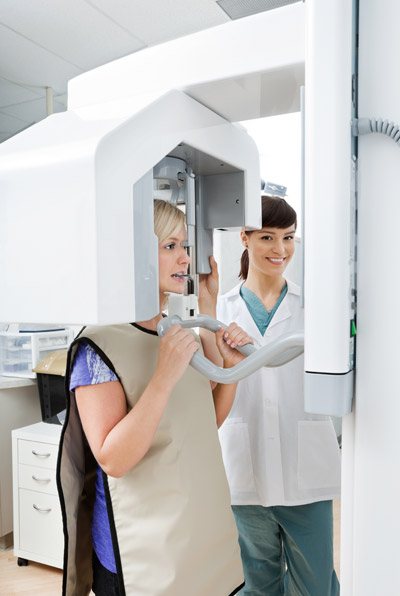
Any of these symptoms can exist at birth, be acquired after birth as a result of hereditary or environmental influences, or as a result of trauma to the face. Before any treatment begins, a consultation will be held to perform a complete examination with x-rays. During the pre-treatment consultation process, feel free to ask any questions that you have regarding your treatment. When you are fully informed about the aspects of your care, you and your dental team can make the decision to proceed with treatment together.
Do You Have Missing Teeth or Serious Pain in Your Teeth or Jaw?
Call Us Now to Reclaim a Pain-Free, Confident Smile!
Technology & Jaw Surgery
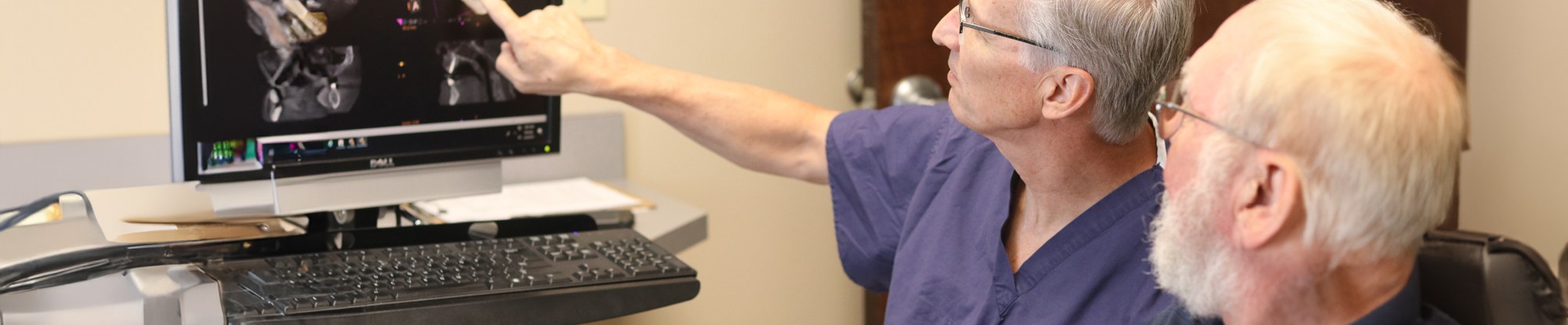
Dr. Carlson, Dr. Link, Dr. Fairburn, Dr. Farnham, Dr. Loeb or Dr. Davis uses modern computer-aided techniques and three-dimensional models to show you exactly how your surgery will be approached. Using comprehensive facial x-rays and computer video imaging, we can show you how your bite will be improved and even give you an idea of how you’ll look after surgery. This helps you understand the surgical process and the extent of the proposed treatment.
If you are a candidate for corrective jaw surgery, Dr. Carlson, Dr. Link, Dr. Fairburn, Dr. Farnham, Dr. Loeb or Dr. Davis will work closely with your dentist and orthodontist during your treatment. The actual surgery can move your teeth and jaws into a new position that results in a more attractive, functional, and healthy dental-facial relationship.
What to Expect
- Corrective jaw surgery is a significant intervention requiring many months of preparation.
- The surgery is performed in the hospital and can last between one to four hours.
- Hospital stays of one to three days are normal.
- Braces are maintained during surgery and may need to be removed six to twelve months after surgery.
- The greatest impact of orthognathic surgery is the recovery phase.
- Patients typically may be off work/school from two weeks to one month after surgery.
- Return to normal chewing function may take 2 months and full
function may take one year.- Our goal is to ensure you are well taken care of during and after surgery.
- Weekly appointments are required for up to two months after surgery.