


Dental Implants in Tuscaloosa
What Are Dental Implants?
A natural tooth consists of a root and a crown. If you compare natural teeth to implant-supported replacement teeth, you’ll see they have the same basic parts. Both have a crown (the visible part used to chew food). Both have a root that holds the tooth securely under the gum and is anchored into the jaw. The difference is that the implant is made of titanium – the same time-tested material used by surgeons for artificial joints. When you lose a tooth, you lose both the root and the crown. To replace the tooth, the surgeon first replaces the root with a small dental implant.
Time is allowed for bone to heal and grow around the dental implant. The bone bonds with the titanium, creating a strong foundation for artificial teeth. A support post (abutment) is then placed on the implant and a new replacement tooth (crown) is placed on top of the abutment. In many cases, a temporary replacement tooth can be attached to the implant immediately after it is placed. If all of your teeth are missing, a variety of treatment options are available to support the replacement teeth.

“Don’t be afraid to Smile.”
For years I’d felt like a part of my body was missing — because my teeth were. My dentist told me that dental implants would make me feel and look a lot better. OK, I said. Now, I’m thrilled. I can smile, eat anything, and enjoy a good laugh with my friends.

Surgical Advances in Dental Implants
Using the most recent advances in dental implant technology, Dr. Carlson, Dr. Link, Dr. Fairburn, Dr. Farnham, Dr. Loeb or Dr. Davis is able to place single-stage implants. These implants do not require a second procedure to uncover them but do require a minimum of six weeks of healing time before artificial teeth are placed. There are even situations where the implant can be placed at the same time as the tooth extraction – further minimizing your number of surgical procedures.
Dental implant placement is a team effort between an oral and maxillofacial surgeon and a restorative dentist. Dr. Carlson, Dr. Link, Dr. Fairburn, Dr. Farnham, Dr. Loeb or Dr. Davis performs the actual implant surgery, initial tooth extractions, and bone grafting if necessary. The restorative dentist (your dentist) fits and makes the permanent prosthesis. Your dentist will also make any temporary prosthesis needed during the implant process.
The Dental Implant Process
Dental implants provide a durable, natural-looking solution for replacing missing teeth, helping you restore both function and aesthetics. At University Oral & Facial Surgery in Tuscaloosa, we are dedicated to offering the highest quality care through a comprehensive and personalized dental implant process. Here’s an overview of what you can expect when you choose dental implants with our experienced team.
1. Initial Consultation and Evaluation
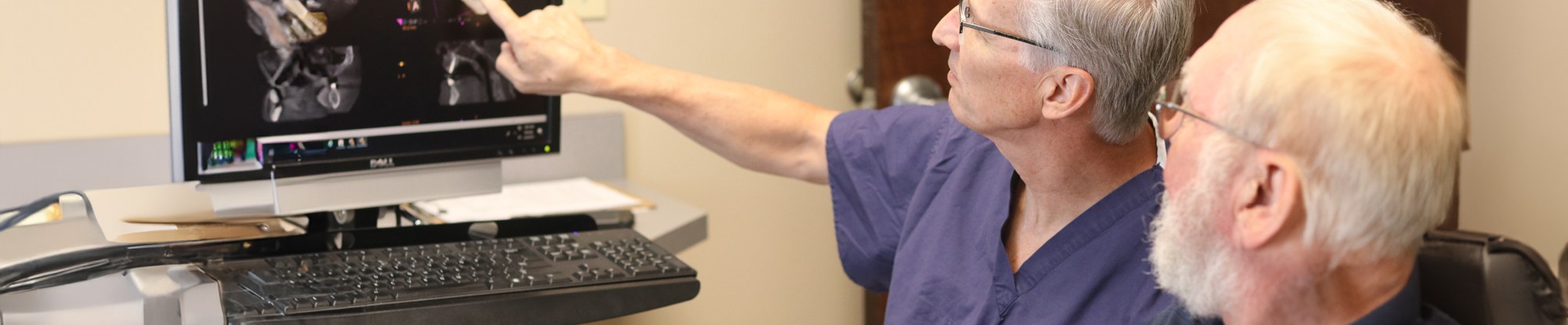
The first step in your dental implant journey is scheduling a consultation at our Tuscaloosa office. During this visit, our skilled oral surgeons will assess your oral health, review your medical history, and discuss your smile goals. We may take digital X-rays or 3D scans to evaluate the condition of your jawbone and determine whether you are a good candidate for dental implants. If necessary, we’ll explore options like bone grafting to ensure there is enough bone to support the implants.
2. Customized Treatment Planning
Once we have all the information we need, we will create a personalized treatment plan that fits your specific needs. Whether you need to replace a single tooth, multiple teeth, or a full arch, we will walk you through each step of the process, explaining what to expect and setting clear goals for your treatment timeline.
3. Implant Placement Surgery
The next step is the surgical placement of the dental implant. This is typically performed under local anesthesia or sedation, ensuring you are comfortable throughout the procedure. During surgery, we will carefully place a titanium post (the dental implant) into your jawbone. This post acts as the new root of your missing tooth. Over time, the implant will fuse with the bone in a process known as osseointegration. While this procedure is minimally invasive, it requires some time for recovery to allow proper healing.
4. Healing and Osseointegration
After your implant is placed, the healing process typically takes 3-6 months, allowing the titanium post to integrate with the surrounding bone. During this period, we may provide a temporary restoration to help maintain your appearance and functionality. We will schedule follow-up appointments to monitor the healing process and ensure that everything is progressing smoothly.
5. Abutment Placement
Once your implant has fully integrated with the bone, we will schedule a follow-up visit to place the abutment. The abutment is a small connector that attaches the implant to the final restoration. This procedure is minimally invasive and generally requires only local anesthesia for comfort.
6. Custom Restoration
The final step of your dental implant process is the placement of your custom restoration. Whether you need a crown, bridge, or denture, our lab will create a personalized solution designed to match the size, shape, and color of your natural teeth. Once your custom restoration is ready, we will securely attach it to the abutment, completing your implant procedure and restoring your smile.
7. Aftercare and Maintenance
After your dental implant is placed and fully restored, it’s essential to maintain a good oral hygiene routine. Regular dental visits, cleanings, and check-ups will help ensure the longevity of your dental implants and overall oral health. We will provide personalized aftercare instructions to guide you through maintaining your new smile for years to come.
Dental Implants FAQs
- What are dental implants?
Dental implants are titanium posts placed into the jawbone to replace missing teeth. They act as artificial tooth roots and support crowns, bridges, or dentures for a natural‑looking, long‑lasting restoration.
- How long do dental implants last?
With proper care, dental implants can last decades — often a lifetime. The crown may need replacement over time due to normal wear, but the implant itself is designed for long‑term stability.
- Am I a candidate for dental implants?
Most adults with healthy gums and adequate bone structure qualify. Even if you’ve been told you don’t have enough bone, options like bone grafting or zygomatic implants may still make treatment possible.
- What is the dental implant process?
The process typically includes consultation, imaging, implant placement, healing (osseointegration), abutment placement, and final crown delivery. Healing time varies but often ranges from 3–6 months.
- Are dental implants painful?
Most patients report minimal discomfort during the procedure thanks to anesthesia and sedation options. Post‑operative soreness is normal and usually manageable with over‑the‑counter medication.
- How long does recovery take?
Initial healing takes a few days, but full integration of the implant with the bone takes a few months. You can usually return to normal activities within 24–48 hours.
- What is osseointegration?
Osseointegration is the natural process where the jawbone fuses with the implant. This creates a stable foundation for your final restoration and is key to long‑term success.
- What if I don’t have enough bone for an implant?
Bone grafting, sinus lifts, or ridge augmentation can rebuild bone. Your surgeon will determine which option is best based on your anatomy and treatment goals.
- How do I care for my dental implant?
Brush and floss daily, maintain regular dental cleanings, and avoid smoking. Implants require the same care as natural teeth to prevent gum disease and ensure long‑term success.
- Can dental implants fail?
Implant failure is rare but can occur due to infection, poor bone quality, smoking, or uncontrolled medical conditions. Choosing a trained oral surgeon significantly reduces risks.
- Are dental implants covered by insurance?
Coverage varies widely. Some plans cover portions of the surgical procedure or restoration. Our team will verify your benefits and provide a detailed estimate before treatment.
- What are the benefits of dental implants compared to dentures or bridges?
Implants look, feel, and function like natural teeth. They prevent bone loss, don’t rely on neighboring teeth, and offer superior comfort and stability compared to removable dentures.
- Can I get implants if I have dentures?
Yes. Implants can stabilize or replace dentures entirely. Options include implant‑supported overdentures or fixed full‑arch restorations.
- How many implants do I need for a full arch?
Full‑arch restorations typically use 4–6 implants per arch, depending on bone quality and the type of prosthesis.
- What should I eat after implant surgery?
Stick to soft foods for the first few days — yogurt, eggs, smoothies, mashed potatoes, soups. Avoid straws, crunchy foods, and anything that may disturb the surgical site.